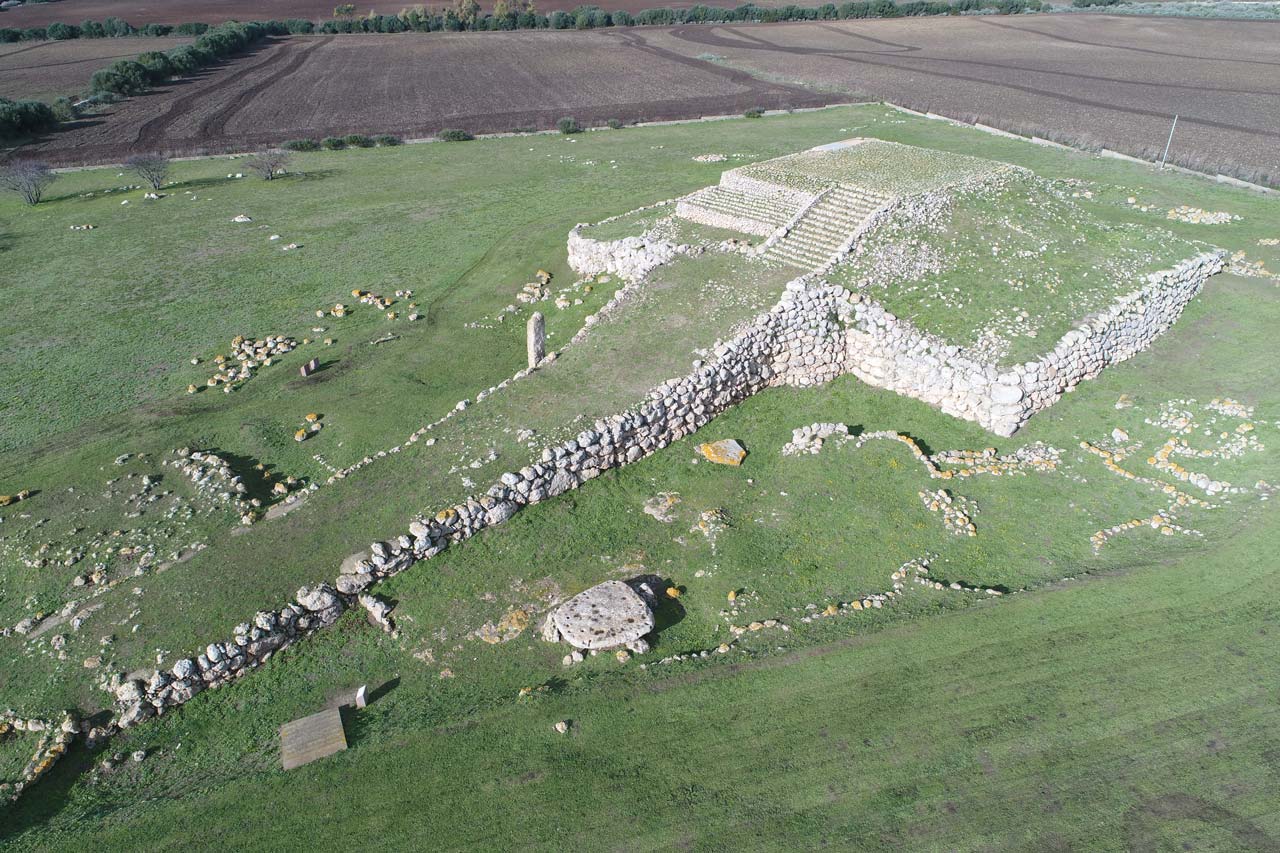
The prehistoric sanctuary of Monte d’Accoddi rises just a few kilometers from Sassari, on the edge of the Nurra plain.
The site, occupied during various phases from the Neolithic to the Early Bronze Age, brings together superimposed altars, huts, sacred stones, and burials in a single location, making it a unique landmark in Sardinian archaeology.
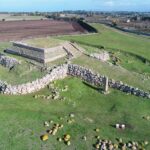
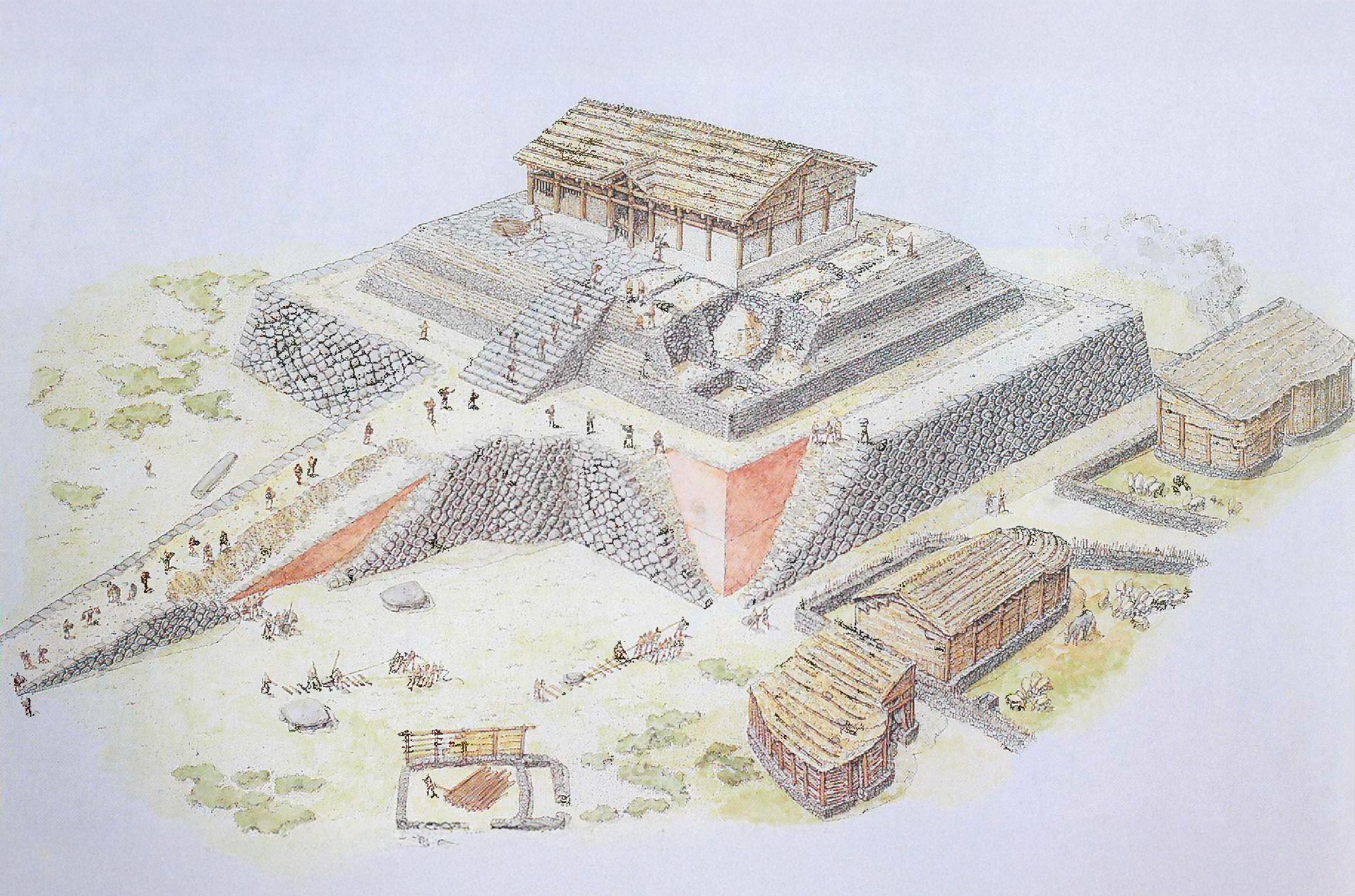
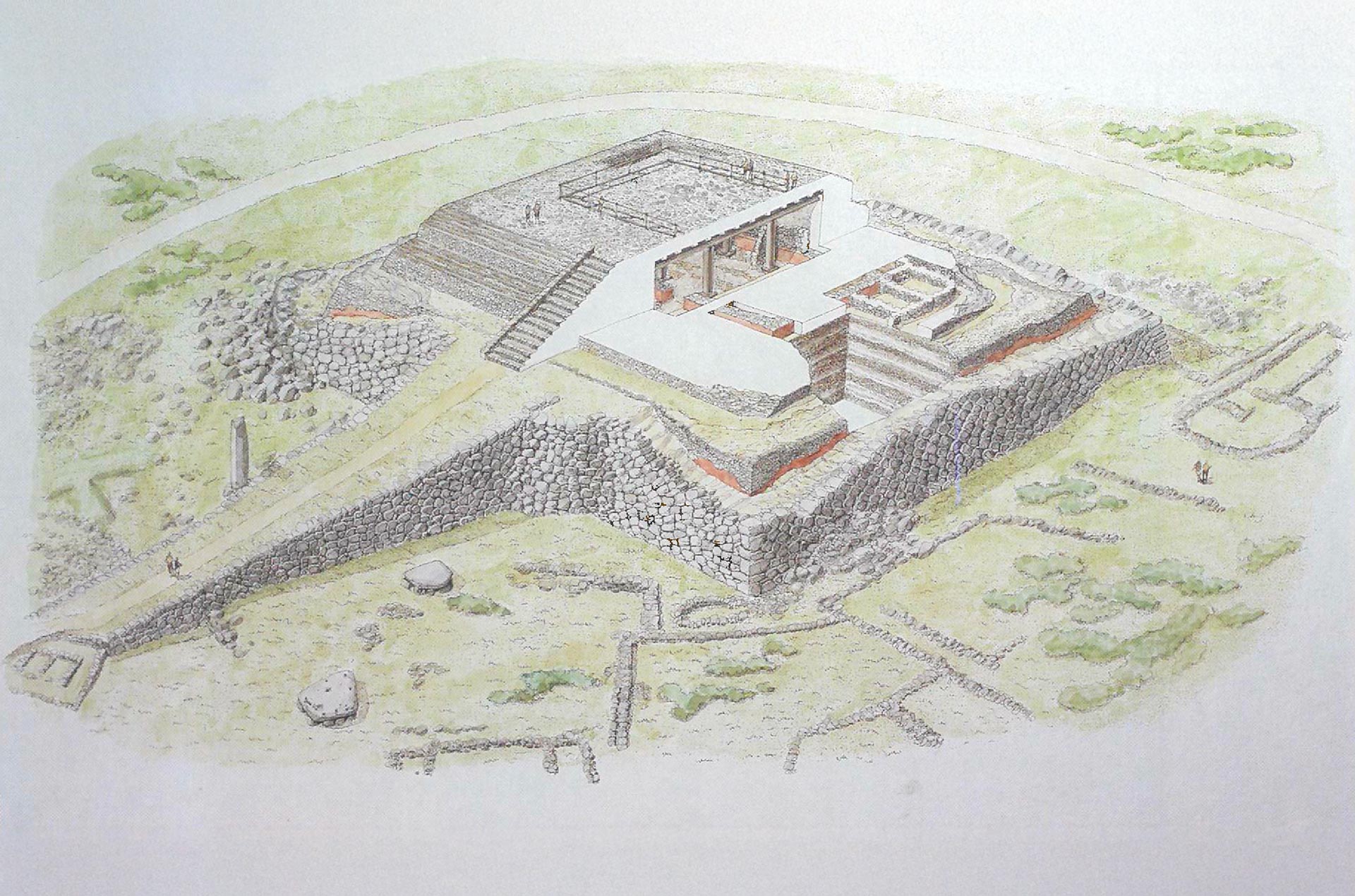
The main monument is a terrace altar in the shape of a truncated pyramid: a rectangular platform measuring approximately 37 × 30 meters, standing about ten meters high today, reached by a 42-meter-long ramp. Built at the beginning of the Copper Age, it incorporates an even older sanctuary and is surrounded by the remains of the village and spaces reserved for rituals and the memory of the deceased.
A true sacred landscape extends around the altar: offering slabs, a large menhir, spheroidal blocks with cup marks, and -in the surrounding territory- hypogeic necropolises, dolmens, and other funerary monuments.
Monte d’Accoddi is therefore much more than a single building: it is the symbolic center of an area that was intensely inhabited and sanctified for millennia.
Evolution of the Sanctuary
The structures visible today at Monte d’Accoddi are the result of a long sequence of phases.
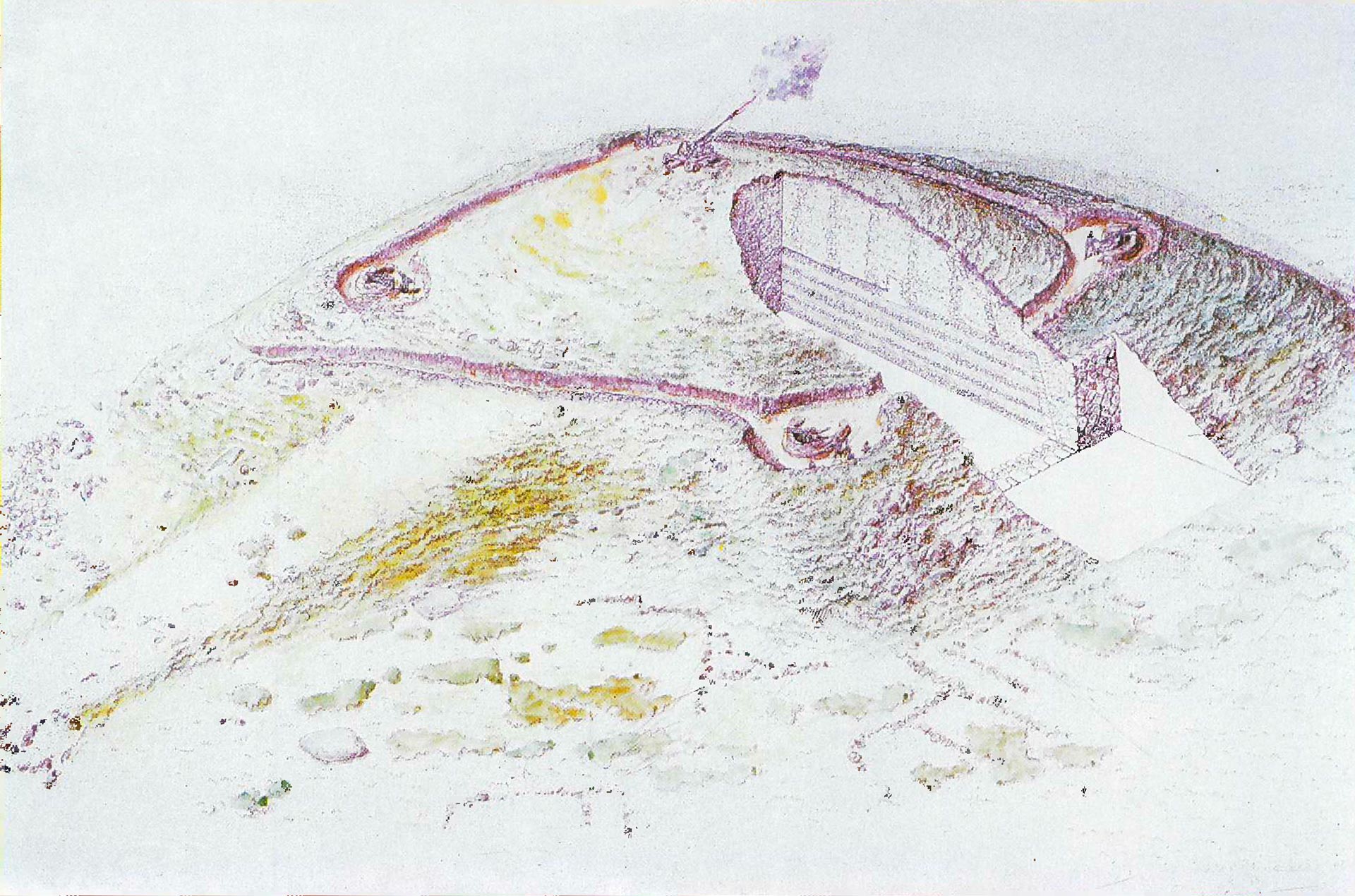
The area was occupied, at least sporadically, since the Early Neolithic. Between the San Ciriaco and Ozieri I cultures (approx. 4400-3500 BC), it hosted an initial village-sanctuary. The so-called “Red Temple”, covered in ochre, belongs to this phase.
At the beginning of the Copper Age, during the Ozieri II phase (3550-2900 BC), the complex took on the appearance of the great stepped altar we see today. Around this structure, in the full Copper Age (Abealzu Culture, 2700-2400 BC), a village extended.
The monument appears to have been definitively abandoned during the Early Bronze Age, even before the development of the Nuragic civilization.
From the first huts to the Red Temple
The first traces of settlement date back to between the Early Neolithic and the Late Neolithic. In these phases, linked to the San Ciriaco and Ozieri I cultures (approx. 4400-3500 BC), a village with huts and spaces dedicated to worship developed on the small natural hill.
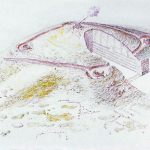
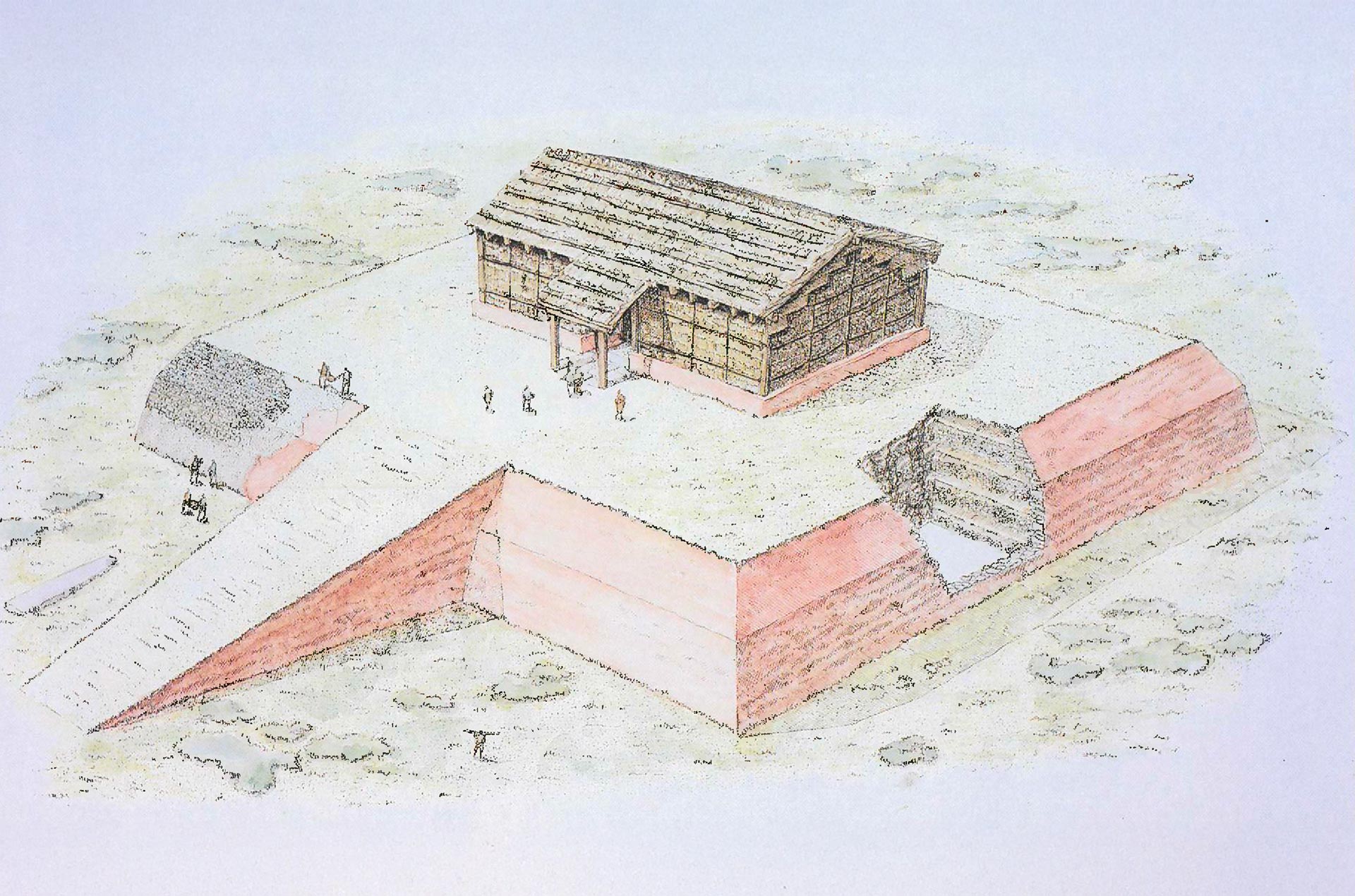
At the center of the settlement, an elevated sanctuary was built, covered with earth and stones, with walls plastered and painted with red pigments: this is the monument that archaeologists call the “Red Temple”. Its shape echoes, on a smaller scale, that of the terrace altar, already designed as a small temple accessible via a ramp.
When the great stepped altar was planned at the beginning of the Copper Age, the first sanctuary was not entirely demolished, but incorporated into the new structure. The remains of the “Red Temple” are currently visible only through archaeological excavations and are not accessible to the public for protection and safety reasons.
The construction of the monumental altar
During the Ozieri II phase, between 3550 and 2900 BC, the hill was transformed into a great monumental altar: a rectangular platform measuring approximately 37 x 30 meters and standing about ten meters high, built with large, roughly shaped limestone blocks and reached by a 42-meter-long ramp.
On top of the platform, a rectangular hall with a gabled roof must have stood, intended for collective ceremonies. At the foot of the ramp, there is a large menhir nearly 4.5 meters high, two large stone slabs that likely served as offering tables, and two spheroidal blocks with numerous cup marks: megalithic elements that emphasize the sacred nature of the area.
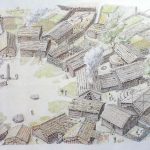
During the full Copper Age (Abealzu Culture, 2700-2400 BC), the sanctuary was surrounded by a village with rectilinear huts and gabled roofs, while the entire territory was dotted with domus de janas necropolises. The monument was likely abandoned only during the Early Bronze Age, when the landscape would become dominated by nuraghe.
Through villages, superimposed altars, sacred stones, and necropolises, Monte d’Accoddi tells the story of the long transition from Neolithic communities to the societies of the Copper Age and Early Bronze Age in Sardinia.
The sanctuary and its territory
Monte d’Accoddi is part of a very rich archaeological landscape. The surrounding territory contains domus de janas (hypogeic necropolises), dolmens, menhirs, and other structures that testify to a dense occupation of the area since prehistoric times.
In this context, the stepped altar – visible from a great distance – served as a symbolic and ritual landmark: a space where different groups gathered for shared ceremonies, trade, and meetings, strengthening the identity of the communities in the Nurra region.
Monte d'Accoddi: from the first research to international recognition
After its abandonment in protohistoric times, the hill of Monte d’Accoddi remained an anonymous mound in the countryside for centuries, cultivated and used as a landmark by landowners and shepherds. It was only in the 20th century, with the start of archaeological investigations, that its nature as a great prehistoric sanctuary was recognized.
The history of research began in the 1950s on land owned by Antonio Segni – the future President of the Italian Republic. Archaeologist Ercole Contu was called to investigate what was then thought to be the base of a nuraghe. Instead, the excavations brought to light the stepped altar, the stone slabs, the menhir, and the remains of the village, leading to the recognition of a unique Copper Age sanctuary.
In the 1980s and 1990s, excavations by the University of Genoa, directed by Santo Tinè, revealed the oldest structures, including the “Red Temple” incorporated into the current monument – a decisive discovery for understanding the site’s history. In the early 2000s, new research coordinated by Alberto Moravetti and studies on the materials conducted by Maria Grazia Melis refined the site’s chronological sequence. Today, Monte d’Accoddi is one of the key sites for the study of Sardinian prehistory and continues to be the focus of projects for research, protection, and enhancement.
The following chronology summarizes the main moments that transformed a simple natural hill into one of the most important prehistoric sanctuaries in Sardinia.
1952Discovery of the sanctuaryIn 1952, archaeologist Ercole Contu began the first investigations on the hill of Monte d’Accoddi, on land owned by Antonio Segni. What appeared to be a simple mound - perhaps the remains of a nuraghe - was instead revealed to be a large prehistoric sanctuary with a terrace altar, menhir, and village structures.
- 1999
1958Conclusion of the first excavation campaignsBetween 1952 and 1958, Contu conducted the first systematic excavation campaigns, which led to the discovery of the stepped altar, the large stone slabs, the menhir, and part of the Eneolithic village. Upon the conclusion of the works in 1958, the complex was interpreted as a Copper Age sanctuary, without parallel in Sardinia.
- 1999
1979New research and discovery of the "Red Temple"In 1979, the University of Genoa - under the direction of Santo Tinè - reopened the excavations at Monte d’Accoddi. The research, which continued until 1989, led to the discovery of an initial, smaller altar with plastered walls painted in red ochre, the so-called "Red Temple". This structure was incorporated within the stepped altar and proved decisive in clarifying the evolution of the sanctuary.
- 1999
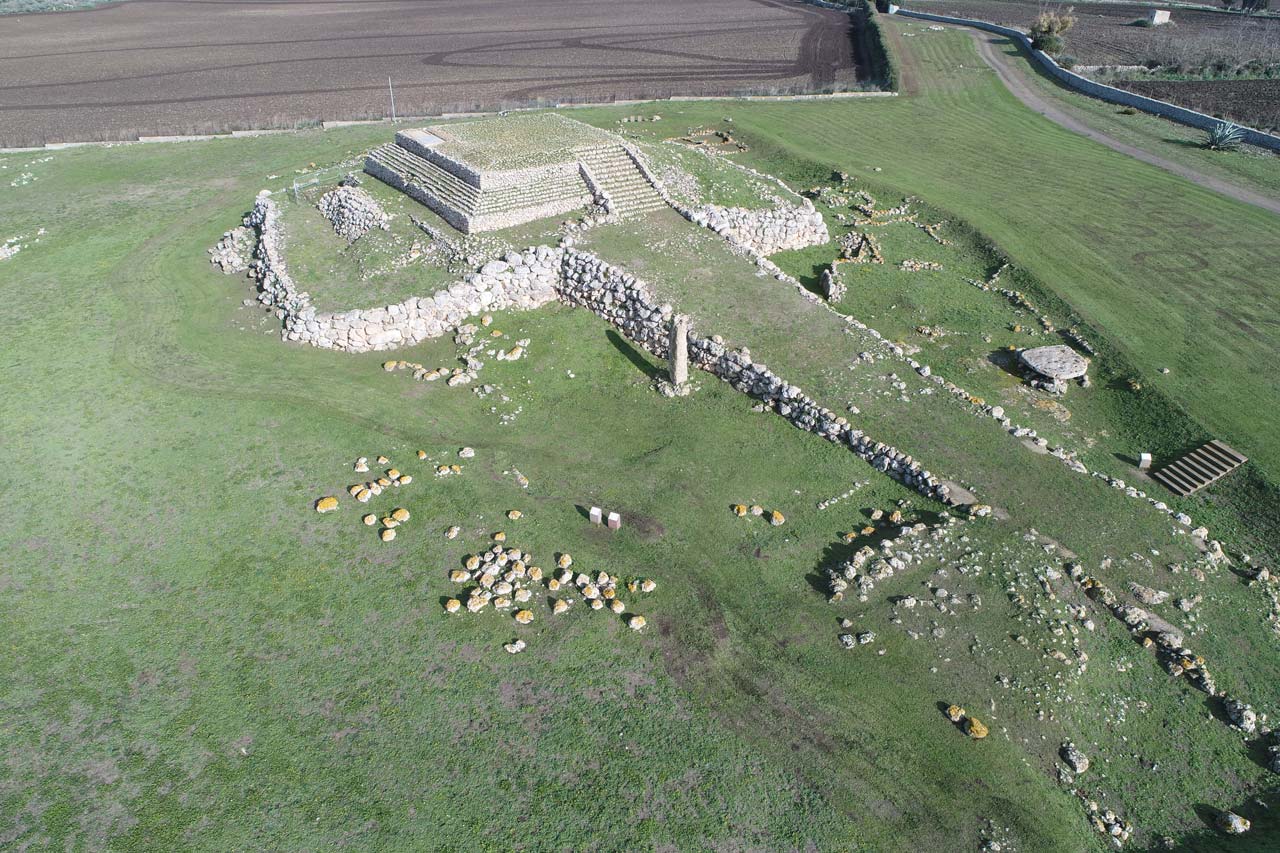
1988Restoration work on the monumentAt the end of the 1980s, the monument underwent significant restoration and reconstruction work, designed to provide visitors with a hypothetical reconstruction of the terrace altar's original appearance. During this phase, the menhir, the large slabs, and the spherical stones were returned to their positions, and the ramp and parts of the collapsed walls were reconstructed.
- 1999
1990Research Conference: Monte d’Accoddi - 10 years of new excavationsThe conference, hosted by the National Archaeological Museum of Sassari between October 18 and 20, 1990, represented the most significant moment of exchange for the scientific community regarding the monument. The lively debate that followed was published in 1992 in a volume edited by S. Tinè.
- 1999
2009Latest restorationsBetween August and December 2009, the most recent restoration and consolidation work on the structure took place. Conducted by the Superintendency for Archaeological Heritage for the Provinces of Sassari and Nuoro, this intervention allowed for a deeper understanding of certain aspects of the monument.
- 1999
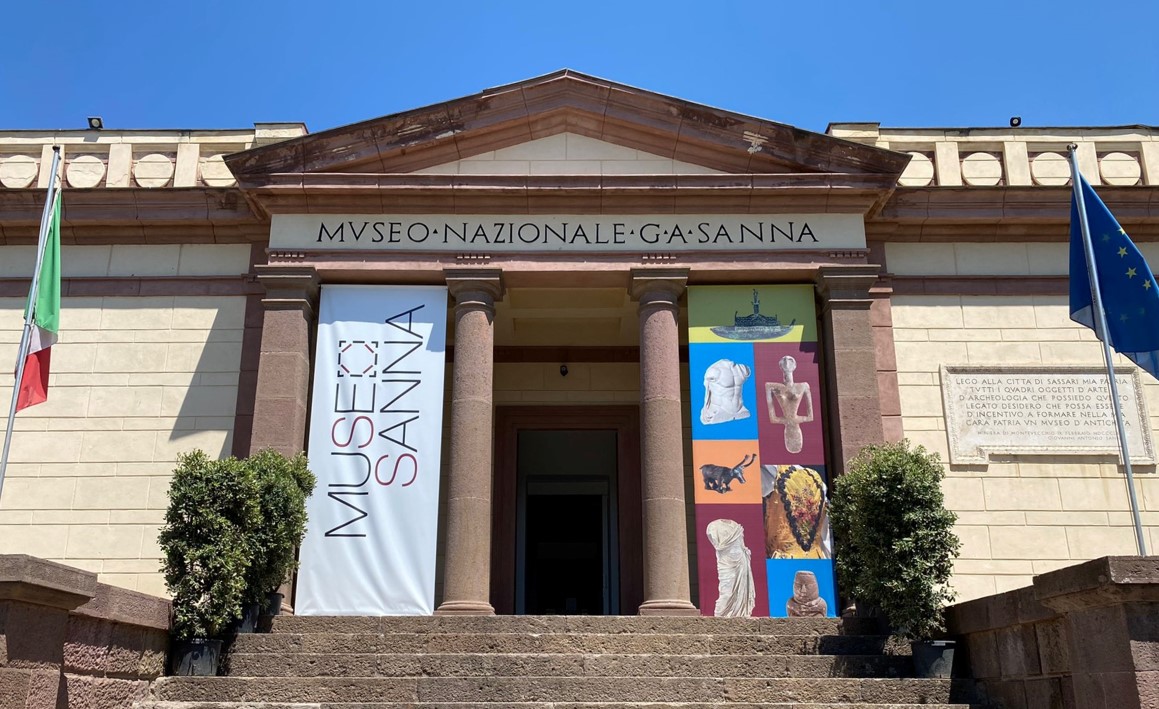
2024New exhibition of materialsThe redesign of the National Archaeological Museum of Sassari has allowed for a complete revision of the display of materials from the sanctuary. Today, a dedicated section within the Prehistoric Hall is entirely focused on these findings.
- 1999