Listen to the Audioguide
Show the text
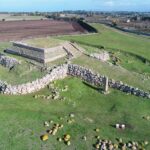
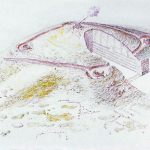
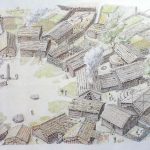
The site of Monte d’Accoddi was frequented over a very long period of time, during which the main cultures that characterized the prehistory of Sardinia from the Late Neolithic through the entire Copper Age succeeded one another or coexisted. The area was frequented at least sporadically as early as the Early Neolithic, and then more steadily during the phases named after the San Ciriaco culture (4400 BC) and Ozieri I (4000–3500 BC), with the creation of the first village-sanctuary. The first monument, called the “Red Temple” because it was covered with red ochre, can be dated to this phase. The appearance visible today is that which the monument took on at the beginning of the Copper Age, during the Ozieri II phase (3550–2900 BC). The huts of the village, dating to the full Copper Age (2700–2400 BC), are attributed to the so-called Abealzu culture, while the monument seems to have been definitively abandoned in the Early Bronze Age, before the development of the Nuragic Civilization.
The history of the sanctuary clearly shows the effort of the entire community, which conceived an original monument with an exclusively cultic revealing function, whose importance must have extended over a vast territory.
Continue the visit
From here, you can continue the guided tour or return to the interactive map to choose another stop.
What are you looking at?
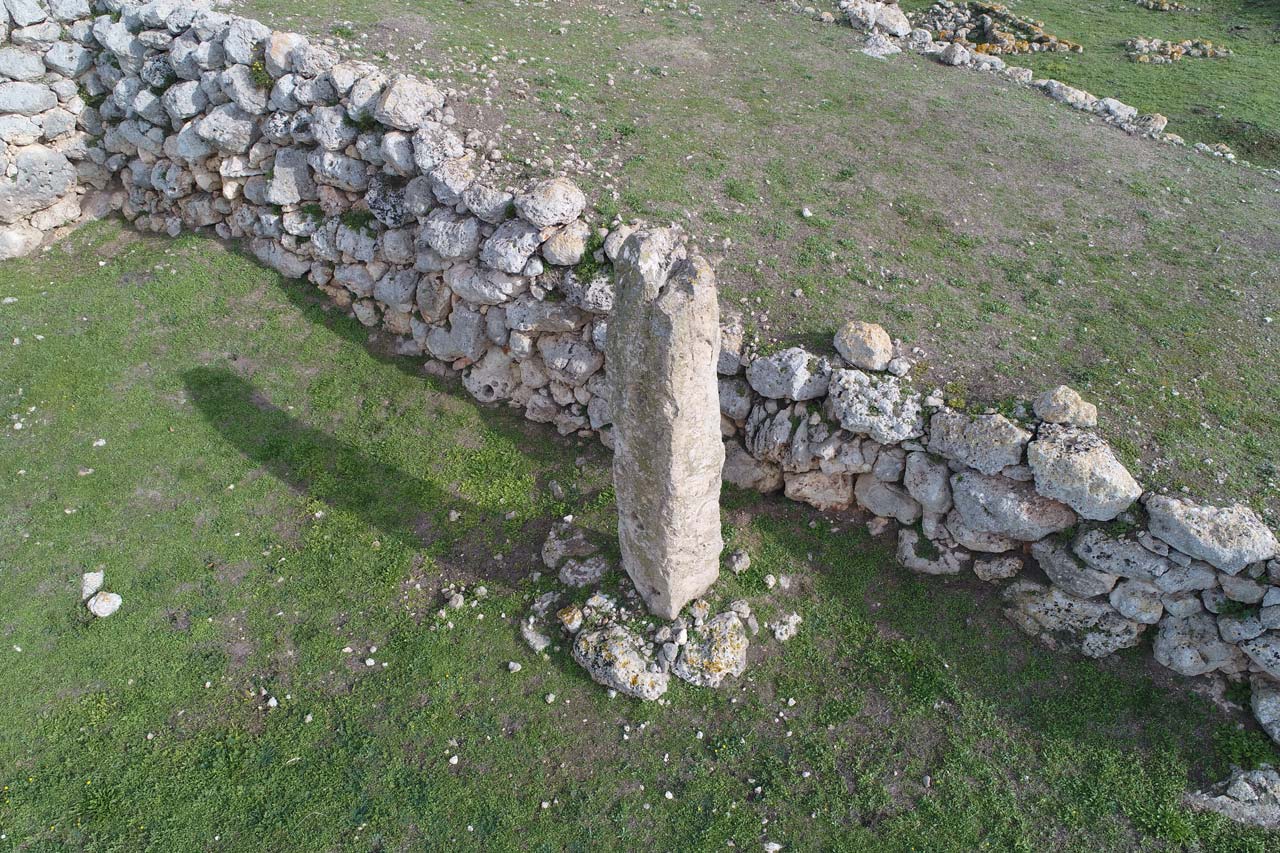
Before you rises the great menhir of Monte d’Accoddi, a monolith almost four and a half meters tall, repositioned on its original base beside the sanctuary ramp. At its base, archaeologists found pits containing pig bone remains, probably linked to meals or ritual sacrifices carried out in this ceremonial space.