Listen to the Audioguide
Show the text
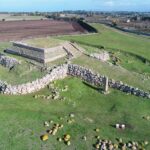
In addition to the main monument, the sanctity of the area is indicated by the presence of several megalithic elements.
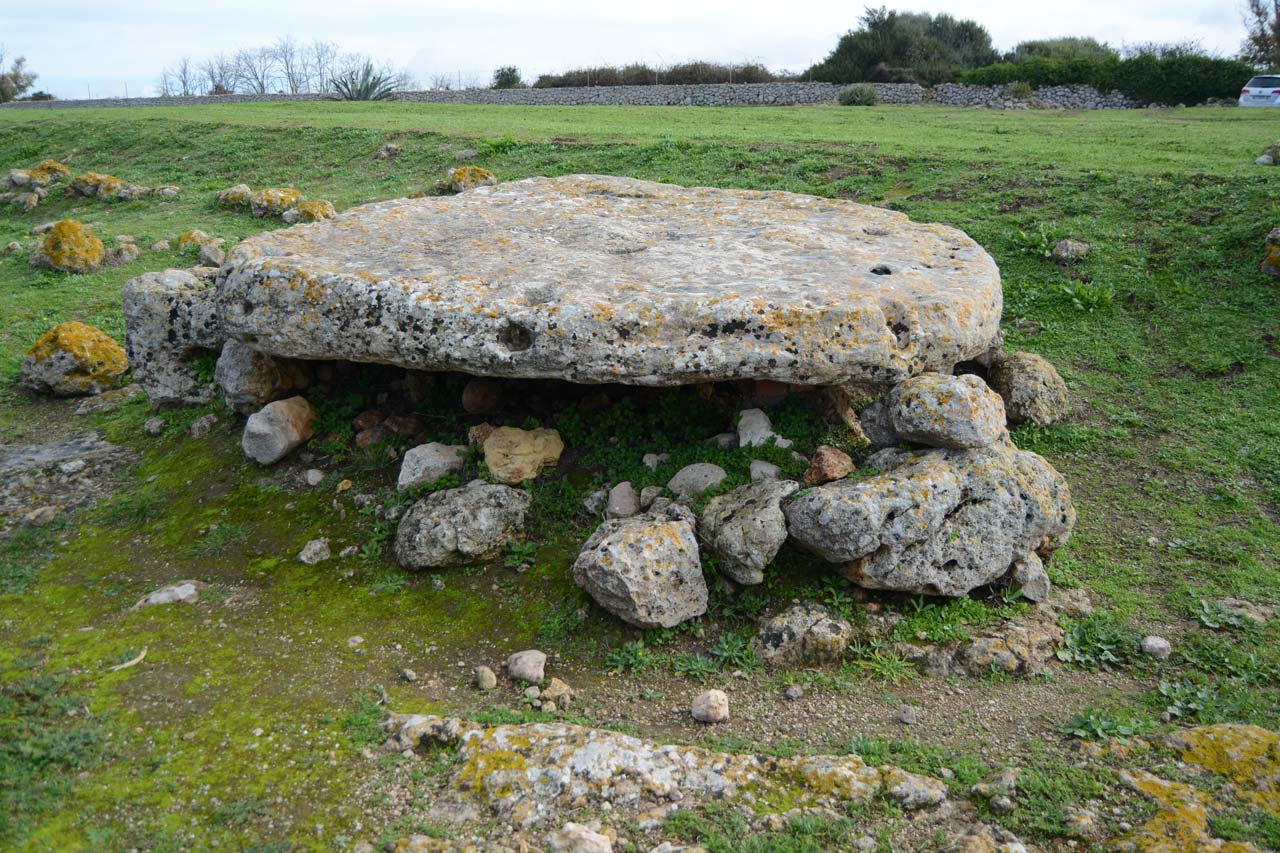
Next to the ramp, on the western side, a menhir almost 4.5 meters high has been repositioned on its original base; in front of it, pits containing pig bone remains were found, possibly related to ritual meals. Other menhirs are located a few hundred meters away. On the opposite side of the ramp, two horizontal slabs have been interpreted as offering tables. The larger one, made of limestone and trapezoidal in shape, lies above a natural sinkhole and has a surface covered with cup-marks. Through-holes may have been used to tie animals intended for sacrifice. The second slab, smaller in size, is associated with the older sanctuary.
Finally, two large spheroidal blocks found during agricultural work at a short distance were placed near the sanctuary. These too display numerous cup-marks on their surface.
Continue the visit
From here, you can continue the guided tour or return to the interactive map to choose another stop.
What are you looking at?
In this area, attention shifts to the megalithic elements surrounding the monument. In front of you, beside the ramp, are the large horizontal slabs interpreted as offering tables, one of which, trapezoidal in shape, features numerous cup-marks on its surface. A short distance away, two spheroidal blocks known as omphaloi have also been placed, likewise carved with cup-marks: all these elements help emphasize the ritual function of the area around the altar.
On the other side of the ramp stands the large menhir, repositioned on its original base: a monolith almost four and a half meters tall, which marked and sacralized the ceremonial space.