Listen to the Audioguide
Show the text
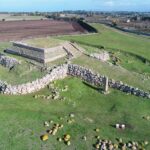
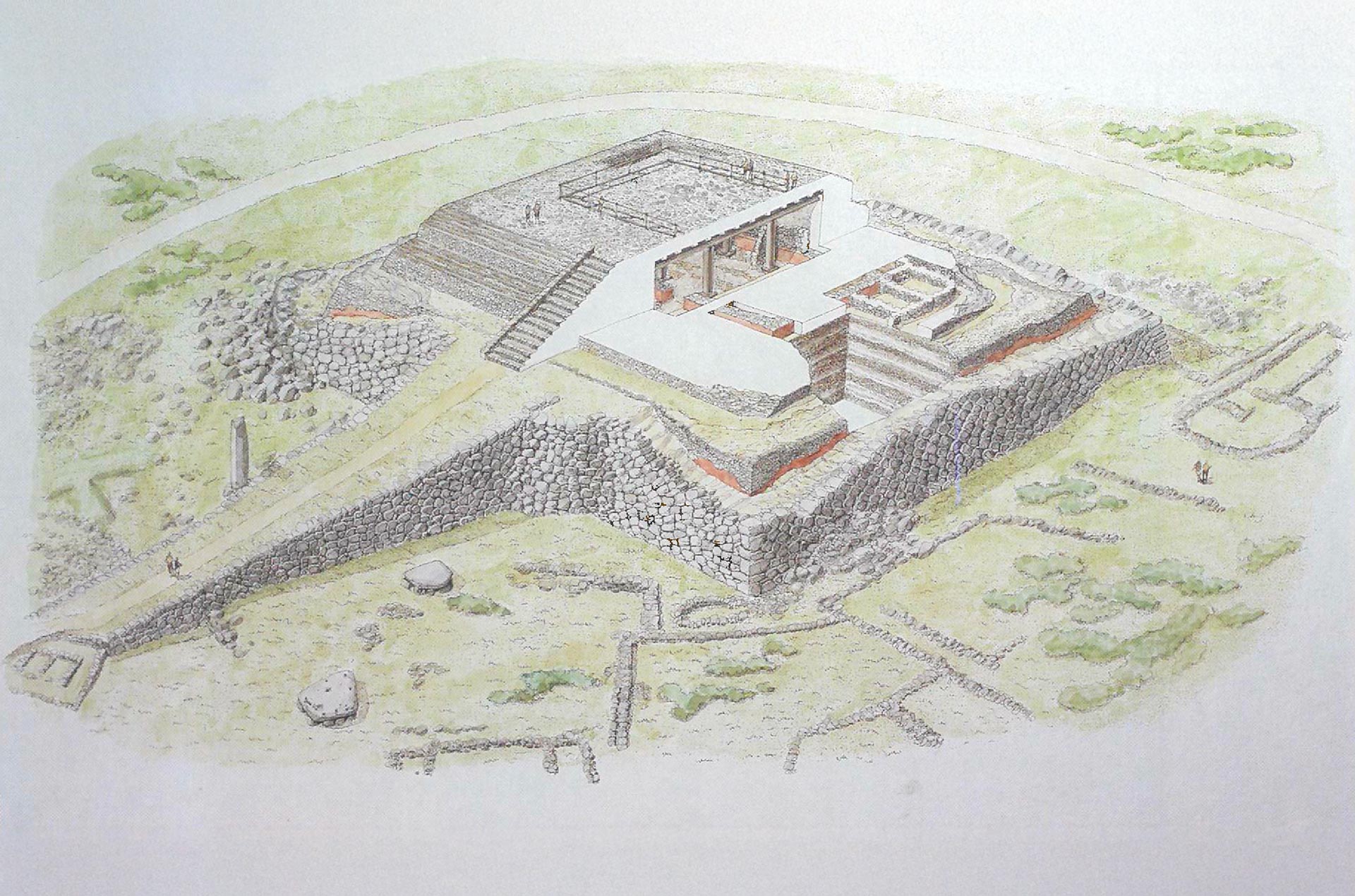
The main monument of the site, the Stepped Temple, consists of a rectangular-plan altar measuring 37 × 30 meters, with a remaining height of about 10 meters, built of large roughly hewn limestone blocks. Access to the top is provided by a 42-meter-long ramp. The monument was built at the beginning of the Copper Age (3500–2900 BC). According to reconstructive hypotheses, a rectangular hall covered by a double-pitched roof must have stood on top of the platform.
The monument visible today was built by incorporating an earlier sanctuary of the same shape but smaller in size.
Archaeological research carried out in the 1980s under the direction of Santo Tiné made it possible to discover, within the structure of the Stepped Temple, the remains of an older altar, finished with red-painted plaster and therefore called the Red Temple.
This section is not currently open to visitors for reasons of protection, conservation, and safety.
Continue the visit
From here, you can continue the guided tour or return to the interactive map to choose another stop.
What are you looking at?
Before you rises the main monument of the site, the stepped temple: a large rectangular altar, built with massive limestone blocks. The sheer mass of the monument and the long ramp leading to the top make clear the strong collective investment required to build it.
Following the ramp with your eyes, you can imagine the ceremonial route that led up to the upper terrace, where a covered hall probably stood. Within the structure, not visible from the outside, an older sanctuary is incorporated—the so-called Red Temple—identified by archaeologists thanks to traces of painted plaster.